
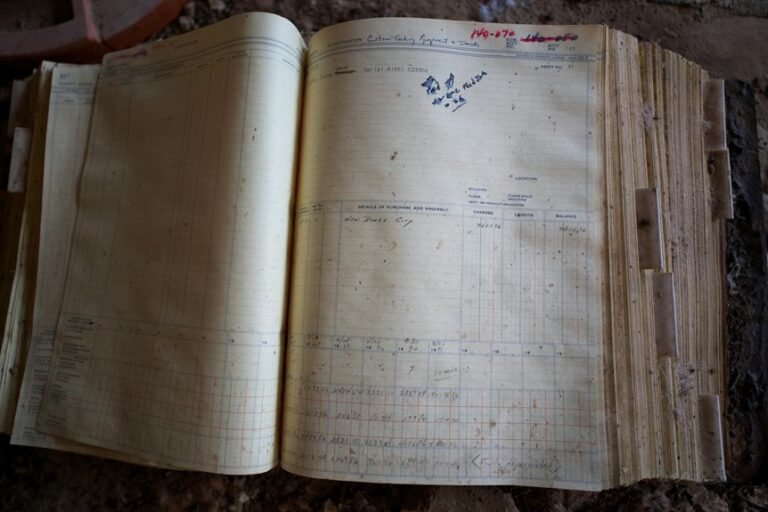
The CrystalFusion Observation Ledger consolidates measured phenomena linked to specific growth stages and fusion events. Each entry aligns temporal markers, environmental conditions, and results to clarify causal sequences. The ledger emphasizes provenance and immutability to support cross-lab comparability. Standardized timestamps and cross-referencing enable data integrity across sites. The narrative mapping highlights condition dependencies and phase transitions, with visualization cues focused on luminescent patterns and growth kinetics. This framework invites further examination of reproducibility challenges and potential methodological refinements.
What the CrystalFusion Observation Ledger Represents
The CrystalFusion Observation Ledger represents a structured repository of measured phenomena, observations, and interpretations related to CrystalFusion experiments and phenomena. It delineates Crystal growth patterns, records Fusion events, and emphasizes Data integrity through standardized entries. Visualization techniques are employed to convey trends, correlations, and anomalies, ensuring reproducibility, traceability, and objective assessment within a freely interpreted scientific framework.
How Each Entry Maps to Crystal Growth and Fusion Events
Each ledger entry is linked to specific crystal growth stages and discrete fusion events through a standardized schema that records temporal markers, environmental conditions, and measurement results, enabling direct traceability from observation to outcome.
The mapping emphasizes growth mapping and fusion events, translating raw observations into structured narratives that reveal causal sequences, condition dependencies, and observable phase transitions without extraneous interpretation.
Standardizing Observations Across Labs: Timestamps, Cross-Referencing, and Data Integrity
How can cross-laboratory standardization ensure that observations remain comparable and reliable across diverse experimental environments? Standardization aligns timestamps, cross-referencing, and data integrity across institutions, enabling consistent interpretation. Cross lab nomenclature clarifies terminology, while data provenance traces origins and transformations. Rigorous metadata, immutable records, and auditability support reproducibility and accountability without constraining scientific freedom. Clear protocols minimize ambiguity, enhancing collective confidence in CrystalFusion observations.
Practical Ways to Visualize and Interpret the Ledger for Reproducible Science
This section outlines concrete, reproducible approaches for visualizing and interpreting the CrystalFusion Observation Ledger across laboratories. Visual representations emphasize luminescent patterns and growth kinetics, enabling cross-site comparisons. Methods include standardized plots, provenance trails, and replication-verified summaries. Emphasis on data provenance supports experimental replication, while transparent annotations and version control sustain rigorous, freedom-driven inquiry and objective interpretation of results.
Frequently Asked Questions
How Is Data Privacy Handled in Ledger Entries?
Privacy is protected through rigorous privacy controls and access governance, ensuring only authorized entities view sensitive fields; data retention is time-bound, with automatic deletion or anonymization after defined periods, preserving traceability while minimizing exposure.
What Error Margins Affect Observation Timestamps?
Error margins influence timestamp precision, as measurement noise and sampling intervals introduce finite uncertainty; timestamps remain deterministic only to the defined resolution, while observed events may shift within that window, juxtaposing exact logging with inherent temporal ambiguity.
Can Entries Be Edited After Submission?
Entries editing after submission is restricted; changes are generally prohibited to preserve timestamp accuracy, except for formal corrections recorded with audit trails. The ledger maintains immutable records; authorized amendments require verified processes and comprehensive timestamp reconciliation.
Are There Standardized Units for Measurements?
Standardized units exist to ensure measurement consistency; they provide a universal framework that supports clear communication. The system favors precision, discipline, and freedom within shared definitions, allowing independent interpretation while preserving interoperable accuracy across disciplines and contexts.
How Is Sensor Calibration Recorded and Tracked?
Calibration provenance is recorded with immutable audit trails and periodic reviews, while timestamp harmonization ensures synchronized metadata across datasets, enabling traceable adjustments and reproducible results for sensor calibration management.
Conclusion
The CrystalFusion Observation Ledger demonstrates a rigorous, cross-lab framework for recording crystal growth and fusion events with precise provenance. By aligning entries to growth stages, environmental conditions, and measurement outcomes, it enables reproducibility and transparent validation across sites. An anticipated objection—that standardized records sacrifice nuance—is addressed: the ledger preserves granular metadata and causal narratives, ensuring both methodological rigor and interpretive depth remain intact. Thus, reproducible science is achieved without sacrificing context or detail.