
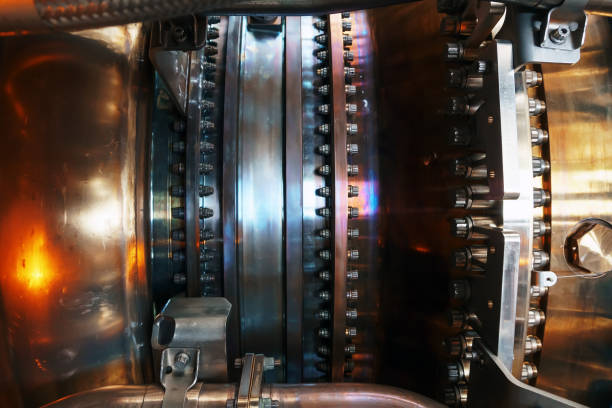
Improving heat rate is a top priority for power plants striving to increase efficiency, reduce fuel consumption, and stay competitive in today’s energy market. Among the many technologies used to optimize gas turbine performance, sealing systems play a critical role. Even small amounts of leakage within a turbine can lead to significant efficiency losses over time.
Two of the most widely used advanced sealing technologies are brush seals and honeycomb seals. Both are designed to reduce leakage and improve turbine performance, but they differ in design, functionality, and overall impact on efficiency.
In this article, we compare brush seals and honeycomb seals in terms of leakage reduction, durability, and heat rate improvement to help operators make informed decisions.
Why Sealing Technology Matters for Heat Rate
Heat rate measures how efficiently a gas turbine converts fuel into electricity. Lower heat rate means higher efficiency, and one of the biggest contributors to inefficiency is internal leakage.
Leakage occurs when high-pressure air escapes through gaps between rotating and stationary components. This results in:
- Loss of usable energy
- Reduced pressure and airflow efficiency
- Increased fuel consumption
Advanced sealing technologies like brush seals and honeycomb seals are designed to minimize these losses, making them essential for improving turbine performance.
What Are Brush Seals?
Brush seals are advanced sealing devices made up of densely packed metallic bristles that form a flexible barrier between rotating and stationary components. These bristles are typically made from high-temperature alloys and are mounted in a way that allows them to maintain contact with the rotating shaft.
The key advantage of brush seals is their ability to operate with extremely tight clearances. Unlike traditional rigid seals, brush seals can adapt to shaft movement, thermal expansion, and vibration without losing effectiveness.
This flexibility allows brush seals to significantly reduce leakage compared to conventional sealing systems.
What Are Honeycomb Seals?
Honeycomb seals use a structured surface made up of small hexagonal cells, resembling a honeycomb pattern. These cells are typically made from lightweight metallic materials and are designed to interact with the rotating component.
Instead of forming a tight physical barrier like brush seals, honeycomb seals work by disrupting airflow. The honeycomb structure creates turbulence and dissipates energy, reducing the amount of leakage through the seal.
Honeycomb seals are often used in conjunction with labyrinth seals to enhance their performance.
Leakage Reduction: Which Performs Better?
When it comes to leakage reduction, both brush seals and honeycomb seals offer improvements over traditional sealing methods. However, their effectiveness differs significantly.
Brush seals are widely recognized for their superior leakage control. Their flexible bristles create a near-continuous barrier, allowing for much tighter clearances. This results in a substantial reduction in air leakage—often significantly lower than what is achievable with conventional seals.
Honeycomb seals, on the other hand, reduce leakage indirectly by increasing resistance to airflow. While effective, they generally do not achieve the same level of tight sealing as brush seals.
Verdict:
Brush seals typically deliver greater leakage reduction due to their ability to maintain close contact and tighter clearances.
Seal Clearance and Efficiency Gains
Seal clearance plays a major role in determining turbine efficiency. Smaller clearances mean less leakage and better energy retention.
Brush seals excel in this area because their flexible design allows them to operate with minimal clearance. They can adjust to changes in shaft position and maintain effective sealing even under dynamic conditions.
Honeycomb seals rely on a fixed structure, which limits how tight the clearance can be. While they improve efficiency compared to traditional seals, they cannot match the tight tolerances achieved by brush seals.
Impact on Heat Rate:
- Brush seals provide greater efficiency gains by minimizing leakage
- Honeycomb seals offer moderate improvements but are less effective in tight clearance scenarios
Durability and Wear Resistance
Durability is a critical factor when selecting sealing technology, especially in high-temperature and high-speed environments.
Brush seals are designed to handle dynamic conditions, but their bristles are subject to wear over time due to continuous contact with rotating components. Advances in materials and design have improved their lifespan, but they still require monitoring and eventual replacement.
Honeycomb seals, by contrast, are more robust in terms of structural durability. Since they do not rely on direct contact in the same way, they experience less wear. The honeycomb structure can also absorb minor impacts without significant damage.
Verdict:
- Honeycomb seals offer greater durability and resistance to wear
- Brush seals provide better performance but may require more maintenance
Performance in High-Temperature Environments
Gas turbines operate under extreme temperatures, making thermal resistance an essential consideration.
Brush seals are typically made from high-temperature alloys that can withstand harsh conditions. However, prolonged exposure to extreme heat can affect bristle integrity over time.
Honeycomb seals perform well in high-temperature environments due to their metallic structure and ability to dissipate heat. They are less susceptible to thermal degradation compared to brush seals.
Verdict:
Both perform well, but honeycomb seals have a slight advantage in extreme thermal conditions.
Installation and Integration
The ease of installation and compatibility with existing systems can influence the choice between brush seals and honeycomb seals.
Brush seals can often be retrofitted into existing turbine designs with minimal modification. Their flexibility makes them suitable for a wide range of applications.
Honeycomb seals are typically integrated into specific design configurations, often as part of a labyrinth sealing system. This can make retrofitting more complex in some cases.
Verdict:
Brush seals are generally easier to retrofit and integrate into existing systems.
See also: IT Support Services Brisbane That Businesses Actually Trust
Maintenance Requirements
Maintenance plays a key role in long-term operational efficiency.
Brush seals require periodic inspection due to potential bristle wear. However, their performance benefits often justify the maintenance effort.
Honeycomb seals require less frequent maintenance due to their durable structure. They are less prone to wear but may still need inspection for damage or degradation.
Verdict:
- Brush seals: higher maintenance but better performance
- Honeycomb seals: lower maintenance but moderate performance
Cost Considerations and ROI
Cost is always a factor in decision-making, especially for large-scale power plants.
Brush seals may have a higher upfront cost due to their advanced design and materials. However, their ability to significantly reduce leakage can lead to substantial fuel savings and improved efficiency, resulting in a strong return on investment.
Honeycomb seals are often more cost-effective initially and offer good durability. However, their lower efficiency gains may result in smaller long-term savings compared to brush seals.
ROI Comparison:
- Brush seals: higher initial cost, higher long-term savings
- Honeycomb seals: lower initial cost, moderate savings
When to Choose Brush Seals
Brush seals are the preferred choice when:
- Maximum leakage reduction is required
- Tight seal clearances are critical
- Heat rate improvement is a top priority
- Retrofitting existing systems for higher efficiency
They are particularly beneficial in high-performance turbines where even small efficiency gains can lead to significant cost savings.
When to Choose Honeycomb Seals
Honeycomb seals are ideal when:
- Durability and long service life are priorities
- Operating conditions involve extreme temperatures
- Maintenance needs to be minimized
- They are used in combination with other sealing systems
They are often used as part of a broader sealing strategy rather than a standalone solution.
Can Brush Seals and Honeycomb Seals Work Together?
In many cases, the best approach is not choosing one over the other but combining both technologies. Hybrid sealing systems can leverage the strengths of each:
- Brush seals provide tight sealing and minimal leakage
- Honeycomb seals enhance durability and airflow control
This combination can deliver optimized performance, balancing efficiency and reliability.
The Future of Sealing Technologies
As gas turbine technology evolves, sealing systems continue to improve. Innovations in materials, coatings, and design are enhancing both brush seals and honeycomb seals.
Future developments are likely to focus on:
- Increasing durability of brush seals
- Enhancing leakage control in honeycomb designs
- Integrating smart monitoring systems
These advancements will further improve heat rate and overall turbine performance.
Conclusion
Both brush seals and honeycomb seals play important roles in improving gas turbine efficiency, but they offer different advantages.
Brush seals stand out for their ability to significantly reduce leakage and maintain tight clearances, making them the superior choice for maximizing heat rate improvements. Honeycomb seals, on the other hand, offer excellent durability and reliable performance in demanding environments.
Ultimately, the best choice depends on your operational priorities. If efficiency and performance gains are the primary goals, brush seals deliver the greatest impact. If durability and lower maintenance are more important, honeycomb seals provide a strong alternative.
For many power plants, a combined approach offers the best of both worlds—delivering improved efficiency, reduced energy loss, and long-term reliability.